
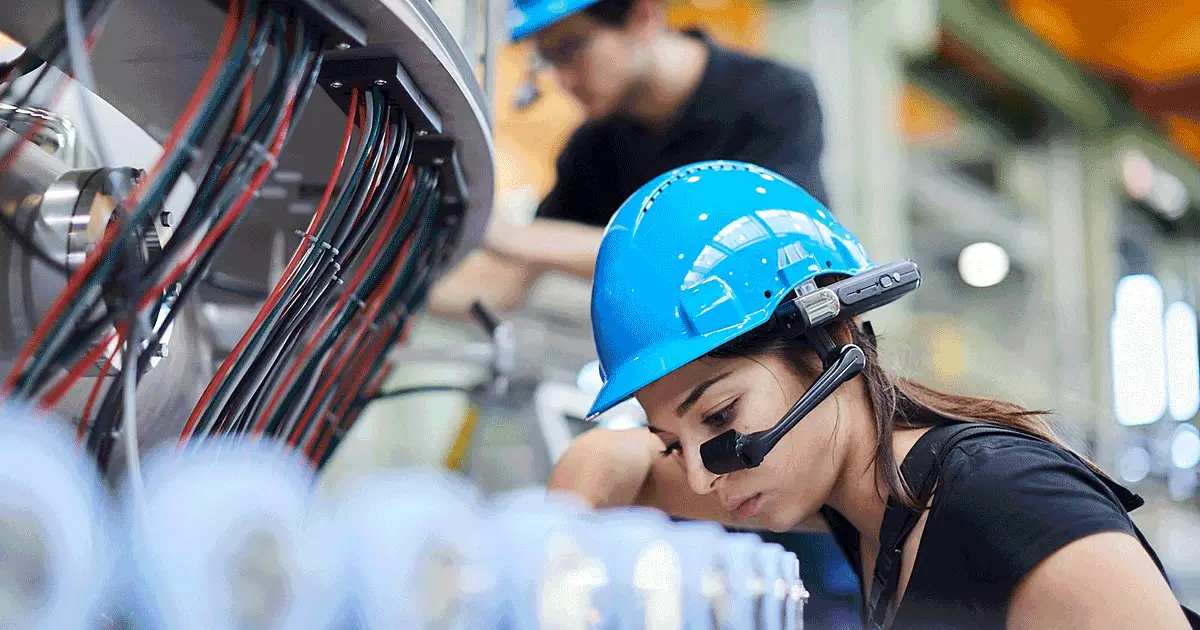
What is a Connected Worker?
A connected worker is a frontline employee who uses digital technology to access information, follow work instructions, communicate and capture data while carrying out their job.
Connected workers use tools such as smartphones, tablets, industrial smart glasses and digital work execution platforms to access the guidance and information they need at the point of work.
Rather than relying entirely on printed instructions, memory or information held in separate systems, a connected worker can follow approved procedures, complete checks and document their activities as part of the job itself.
The term is commonly used in manufacturing, utilities, construction, energy, rail and field service, where workers often operate away from a desk and need practical access to information while completing physical tasks.
Being a connected worker does not necessarily mean having a constant internet connection. Some technologies support offline working, allowing instructions to remain accessible and information to be captured until connectivity is restored.
Why Are Connected Workers Important?
Many operational processes depend on people having the right information and carrying out work consistently.
When instructions are difficult to find, procedures vary between workers or information is recorded after a job, errors and reporting delays can occur.
Connected worker technologies help address these challenges by making digital support available during everyday activities.
The main benefits include:
- Consistent work execution: Digital instructions help workers follow approved procedures and complete required checks.
- Improved quality: Guided activities and verification steps can help reduce errors and missed inspections.
- Better access to knowledge: Workers can refer to instructions, images and supporting information without relying entirely on memory.
- Stronger safety practices: Relevant safety information and required checks can be incorporated into operational procedures.
- Reliable evidence capture: Photographs, measurements, signatures and other information can be documented during work.
- Faster reporting: Digital job reports reduce the need to prepare separate paperwork after completing a task.
- Improved problem identification: Issues discovered during work can be documented for review and follow-up.
The aim is not simply to give workers more technology. It is to make the information and processes they depend on easier to access and use.
What Technologies Support Connected Workers?
Connected worker solutions can include several types of technology, depending on the role, environment and work being performed.
Digital work instructions provide step-by-step guidance for activities such as equipment maintenance, inspections, assembly and production changeovers.
Mobile devices and tablets allow workers to access job information, complete checklists and capture evidence while working on site or in the field.
Industrial smart glasses provide hands-free access to instructions and information. Voice-controlled devices can be particularly useful when workers need both hands available for physical tasks.
Remote assistance tools allow workers to communicate with colleagues or specialists when additional expertise is required.
Digital work execution platforms bring instructions, job management, evidence capture and reporting together, connecting the work being carried out with wider operational processes.
These technologies can work independently or alongside existing systems such as Enterprise Resource Planning (ERP), Manufacturing Execution Systems (MES) and maintenance management software.
The most suitable combination depends on what workers need to accomplish, rather than the technology itself.
What Does a Connected Worker Look Like in Practice?
Connected working can support a wide range of industrial activities.
In manufacturing, an operator might use a tablet to follow an assembly procedure, confirm component checks and record inspection measurements. The completed job report provides evidence of the work performed.
In utilities, a field engineer might access a maintenance procedure on a mobile device, photograph equipment condition and document an issue identified during an inspection.
In oil and gas, a technician may use voice-controlled smart glasses to follow a maintenance procedure while keeping their hands available for the task.
In construction and highways, a worker might complete site safety checks, record completed activities and capture photographic evidence before leaving the location.
In each example, the technology supports the person completing the work while helping ensure that important information is captured and available for subsequent review.
What Is the Difference Between a Connected Worker and a Connected Workforce?
The terms connected worker and connected workforce are closely related, but they describe different levels of digital working.
A connected worker is an individual who uses digital technology to access guidance, information and support while completing their job.
A connected workforce describes a wider group of workers who are connected through shared digital processes, information and operational systems.
For example, a maintenance technician using digital instructions and capturing inspection evidence is a connected worker.
When maintenance technicians across multiple locations use consistent procedures, share information and contribute to common operational reporting, they form part of a connected workforce.
The distinction is between supporting an individual at the point of work and connecting activities across the wider operation.
How Do Connected Workers Improve Work Execution?
Work execution is the process of carrying out operational activities, from following instructions and completing checks to documenting results and reporting issues.
Connected worker technology supports this process by bringing guidance and information capture into the activity itself.
For example, a technician completing a maintenance inspection may need to verify equipment condition, record measurements and confirm that required safety checks have been performed.
A digital workflow can guide the technician through these activities and request relevant evidence at the appropriate stage.
This helps reduce reliance on separate paperwork and makes it easier to establish which activities were completed and what was found.
The information captured can also support supervisors, quality personnel and maintenance managers when reviewing completed work or investigating problems.
Where connectivity is limited, offline-capable systems allow work to continue, with captured information synchronised when a connection becomes available.
Connected Worker vs Digital Worker Technologies: What’s the Difference?
Connected Worker and Digital Worker Technologies are closely related concepts, and the terminology can overlap.
Connected Worker describes the person using digital tools to carry out their work.
Digital Worker Technologies describes the broader category of tools that support frontline employees, including digital instructions, wearables, remote collaboration, training and work execution software.
For example, a technician using industrial smart glasses to follow a maintenance procedure is a connected worker. The smart glasses, digital instructions and supporting software are examples of digital worker technologies.
Not every connected worker needs a wearable device. A smartphone or tablet may be more appropriate for many inspections, maintenance activities and production tasks.
How WorkfloPlus Supports Connected Workers
WorkfloPlus is a digital work execution platform designed to support frontline workers as they complete operational activities.
Workers can access assigned jobs, follow digital work instructions, complete inspections and capture evidence using supported smartphones, tablets and RealWear smart glasses.
Digital operational workflows provide guidance through individual activities and can request measurements, photographs, signatures and other relevant information as work progresses.
Workers can also document issues discovered during a job, helping make unexpected findings visible for further investigation or action.
When work is completed, WorkfloPlus generates a digital job report containing the information collected during the activity.
The platform supports offline working, allowing workers to continue following instructions and capturing evidence in locations with limited connectivity. Information can synchronise when a connection is restored.
For managers and process owners, the resulting job reports and structured data provide greater visibility into completed activities, support compliance requirements and help identify opportunities for improvement.
By connecting guidance, work execution and evidence capture, WorkfloPlus helps workers complete tasks consistently while providing reliable information about what happened during the job.
Related Terms
- Connected Workforce
- Digital Worker Technologies
- Digital Work Instructions
- Digital Operational Workflows
- Frontline Work Execution
- Operational Data Capture
- Industrial Smart Glasses
- Work Execution Layer
Learn More
- Connected Frontline Operations – Explore how connecting people, processes and operational data supports more consistent work across industrial environments.
- WorkfloPlus Platform – Discover how digital work instructions, inspections, job management and evidence capture support frontline workers.
- WorkfloPlus on RealWear – See how voice-controlled smart glasses provide hands-free access to instructions and evidence capture during physical work.
- The Connected Workforce – eBook – Explore how digital technology can support frontline workers, improve consistency and connect operational activities.