Field Service Operations
Improve First-Time Fixes & Visibility in the Field
Once work leaves a central site, operational visibility often starts to break down.
Jobs are carried out across customer locations, remote assets and distributed environments, often by engineers working alone or without direct supervision. At the same time, businesses are under increasing pressure to improve response times, reduce repeat visits and maintain consistent service standards.
Most service management systems can schedule work and allocate engineers. But they rarely provide visibility into how the work itself was actually carried out.
This creates a growing gap between planning and work execution.
Managers may know when an engineer arrived onsite and when the job was closed, but they often have far less visibility into what happened during the task itself. Important operational information can still rely on handwritten notes, delayed reporting or disconnected systems that are difficult to review later.
As operations become more distributed, maintaining consistent standards across engineers, contractors and locations becomes increasingly difficult.
Why Traditional Field Processes No Longer Work
Many remote operations still rely heavily on paper forms, disconnected systems and manual reporting.
Engineers complete work onsite, then later have to rebuild service reports, upload photographs or manually update systems. Operational data is often delayed, inconsistent or incomplete by the time it reaches the wider business.
At the same time, experienced engineers are retiring, customer expectations are increasing and businesses are under pressure to complete more work with fewer people.
This makes consistency harder to maintain across teams and locations. First-time fix rates can suffer when procedures are interpreted differently or important information is missed during the task itself.
It also becomes harder to demonstrate that work was completed correctly, especially in environments where safety checks, inspections and compliance records are critical.
Replacing paper alone does not solve these challenges. Businesses also need ways to guide work more consistently and capture operational knowledge while tasks are being carried out.
The Shift Towards Connected Service Operations
Service operations are becoming increasingly connected.
Businesses want real-time visibility into work completed across remote teams and assets. Engineers need access to procedures, inspections and digital work instructions wherever work takes place.
At the same time, they are looking to reduce paperwork, improve operational consistency and create clearer records of completed work.
This shift is not simply about digitising forms.
It is about connecting work execution data to the wider business.
When work instructions, inspections, evidence capture and reporting are connected directly to the task itself, you gain a much clearer understanding of how work is being performed across field operations.
This improves visibility, strengthens accountability and reduces the gap between planning the work and executing it onsite.
Turning Operational Activity Into Operational Intelligence
Every maintenance visit, inspection and service task generates valuable operational information.
But in many businesses, that information is still trapped inside paper records, disconnected spreadsheets or delayed reports that are difficult to analyse or act upon.
Capturing operational data as work happens creates a clearer picture of how work is performed across teams, assets and locations.
Over time, this helps businesses identify recurring operational issues, improve service consistency and strengthen compliance reporting. It also provides greater visibility into asset condition, engineer activity and operational risk.
Instead of isolated jobs and disconnected reports, frontline activity becomes a connected source of operational intelligence that can support better decision-making across the business.
Built for Today's Service Operations
Guide Work More Consistently

Standardise how tasks are carried out across teams
Guide engineers through tasks step by step while capturing confirmations and evidence as work happens, helping improve consistency and first-time fix rates.
Create a Clear Operational Record
Reduce delays between completing work and closing the job
Photos, readings, signatures and confirmations can all be captured during the task itself, creating a reliable operational record in real time./p>
Reports can be generated instantly once tasks are completed, helping reduce delays between execution, customer sign-off and operational reporting. This improves visibility across operations while helping teams respond faster once work is finished.
Accurate Visibility Across Remote Teams

Gain a real-time view of operational activity
Capture operational data as tasks are completed, helping teams improve communication, accountability and visibility across remote operations.
Reduce Reliance on Paper-Based Processes

Replace paperwork with connected digital work instructions
Standardise reporting and make operational information easier to access, review and share across distributed teams and locations.Capture and Escalate Issues in Real Time

Make problems visible before they become bigger delays
Any issues identified during a job can be captured immediately and shared with the office instantly. So teams can respond faster, and reduce delays caused by disconnected reporting processes.
Operational issues become visible while work is still happening, not hours or days later.
Protect Valuable Expertise & Knowledge

Embed best practice directly into your processes
Capture tribal knowledge and guide new starters through real tasks, helping to build confidence faster and speed up training programmes.Support Hands-Free Working

Keep engineers safe and focused on the task
Enable engineers to access procedures and capture evidence hands-free while connecting onsite teams with remote experts when additional support is needed.Building More Connected Remote Operations
Field service operations are becoming more complex, more distributed and more difficult to manage through paper-based processes alone.
Businesses need better visibility into how work is carried out, greater consistency across teams and clearer operational records that support compliance, performance improvement and future decision-making.
WorkfloPlus helps connect operational planning with work execution by guiding tasks as they happen and capturing proof of job completion in real time.
If you want to improve first-time fix rates, reduce paperwork and gain better visibility across remote operations, we would be happy to show you how.
Book a demonstration to see how WorkfloPlus supports field service operations.
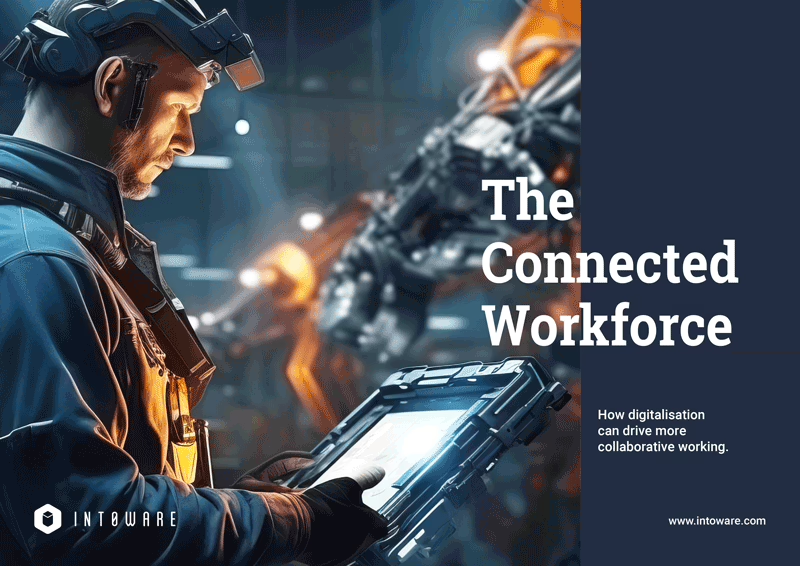
Free Guide:
Explore the benefits of connected frontline working.