
Manufacturers have invested heavily in systems for planning production, managing assets, controlling quality and recording business data. But there is still one part of the operation that can be surprisingly difficult to see: what actually happens when work is carried out.
A procedure may exist in an SOP. A maintenance task may have been scheduled in a CMMS. A production order may have come from an ERP or MES. But completing that work often still depends on paper instructions, PDFs, spreadsheets, local knowledge and manual data entry.
Digital worker technologies help close this gap by giving operators, technicians and engineers the information and guidance they need at the point of work, while capturing accurate data about how that work was completed.
They are becoming an increasingly important part of the manufacturing technology landscape as businesses look beyond simply digitising documents and focus instead on connecting people, processes, data and enterprise systems.
What Are Digital Worker Technologies?
Digital worker technologies are tools and platforms designed to help people carry out industrial work more effectively.
They can provide workers with digital procedures, instructions, training, operational information and access to relevant systems while a job is being carried out. They can also capture information from the work itself, creating a digital record of what happened rather than relying on paperwork or information entered later.
ARC Advisory Group describes digital worker technologies as solutions that connect industrial employees with the information, expertise, systems and assets they need at the point of work. Its 2026 Digital Worker Technologies for Manufacturing MarketMap groups the market around three broad capabilities: digital work instructions, training and collaboration.
In practice, the category can extend further. Many digital worker platforms also support inspections, task execution, evidence capture, data collection, issue reporting and integration with wider manufacturing systems.
The common purpose is to make the digital part of the operation available where the physical work is actually happening.
Why Are Digital Worker Technologies Becoming More Important?
Manufacturing systems are good at managing plans, assets, orders and records. What they do not always capture is the detail of how individual jobs are actually performed.
That can create a gap between the process that was planned and the work that took place.
An SOP might explain the correct process, for example, but it cannot tell you whether the latest version was followed. A maintenance system may record that a job has been completed, but not necessarily provide evidence of each step. A spreadsheet may contain inspection results, but tell you very little about how the inspection was carried out or what happened when a problem was found.
Digital worker technology moves more of this activity into the digital environment.
Instead of simply giving someone a document to read, the procedure itself can become part of the job. The worker follows the required steps, records measurements, answers questions, captures evidence and reports issues as the work progresses.
The result is not simply a digital version of a paper process. It is a more structured way of carrying out work and creating reliable data from it.
What Do Digital Worker Technologies Include?
Digital worker technology is a broad category rather than one specific type of software. Different platforms place more emphasis on different capabilities.
Digital Work Instructions and SOPs
Digital work instructions turn procedures into clear, step-by-step guidance that can be followed while a task is being performed.
Instructions can include text, images, video, diagrams, warnings, questions and required actions. Conditional logic can also change the next step depending on information entered by the worker.
This is particularly useful for complex, safety-critical or infrequently performed tasks where relying on memory or searching through a long PDF increases the risk of mistakes.
Digital SOPs also make it easier to manage changes. Instead of having multiple copies of a procedure circulating around a site, the latest approved version can be made available from a central system.
Work Execution and Task Management
The next step beyond providing instructions is managing the work execution and tasks.
Jobs can be assigned, scheduled and tracked, with the correct procedure delivered to the person carrying out the work. Progress can then be recorded as the job moves from one task to another.
This creates a connection between what needs to happen, how it should be done and what actually happened.
For manufacturers, that can be particularly valuable where work involves multiple stages, people, approvals or dependencies.
Evidence and Data Capture
One of the most important differences between a traditional SOP and a digital worker platform is the ability to capture evidence while the work is being carried out.
That might include measurements, inspection results, photographs, video, signatures, timestamps, locations or other job-specific information.
Instead of asking someone to complete a task and then record the outcome separately, data collection becomes part of the work itself.
This creates a more reliable record and can provide proof that required steps were completed correctly.
It also creates structured work execution data that can be used for reporting, analysis and continuous improvement.
Training and Knowledge Retention
Digital worker technologies can also help manufacturers make operational knowledge easier to access.
Experienced workers often know far more about a process than is contained in the formal procedure. When that knowledge remains largely in people’s heads, it becomes difficult to transfer and can eventually disappear when experienced employees change roles or leave the business.
Digital procedures can capture knowledge and make it available within the work itself.
This means training does not have to stop when someone leaves the classroom. Guidance, images, videos and instructions can remain available at the point where the task is being carried out.
ARC identifies training as one of the three principal areas within digital worker technology, while LNS Research also places guided work, training and knowledge at the point of work within its closely related Connected Frontline Workforce category.
Issue Reporting and Corrective Action
Frontline workers are often the first people to notice defects, equipment problems, process failures or other issues.
Digital worker technology can make it easier to capture these problems while the work is taking place, rather than relying on somebody remembering to send an email or update a spreadsheet afterwards.
The issue can then be recorded with the information already available from the job, including photographs, measurements and other evidence.
More advanced work execution platforms can also help track the issue through investigation and corrective action, creating a clearer connection between finding a problem and resolving it.
Do Digital Worker Technologies Require AR or Smart Glasses?
No.
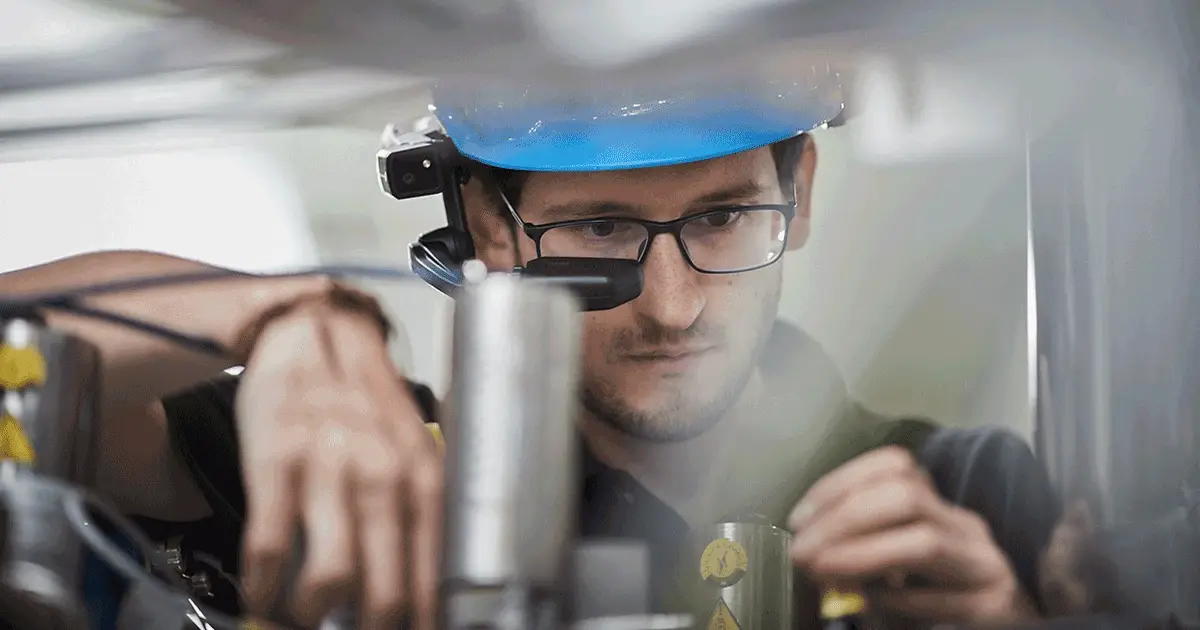
Digital worker technology is sometimes associated with augmented reality, smart glasses and wearable devices, but these are ways of delivering digital information to a worker rather than requirements of the technology itself.
Digital worker applications can run on smartphones, tablets, desktop computers and other mobile devices. Some also support wearable technology where hands-free access is useful.
ARC’s own definition includes a broad range of digital work instruction, collaboration and training technologies. Augmented reality can be used within these experiences, but it is not what defines the category.
For manufacturers, the appropriate device depends on the job.
A quality inspector might use a tablet. A field engineer may use a smartphone. Someone performing a hands-on installation or maintenance procedure may benefit from a voice-controlled wearable.
The important question is not whether a platform uses AR. It is whether the worker can access the right information and capture the required data in a practical way while carrying out the task.
Digital Worker Technology vs Connected Worker Technology
The terms Digital Worker, Connected Worker and Connected Frontline Workforce are often used to describe overlapping areas of industrial technology.
There is no single universally adopted definition separating them.
Connected Worker technology has traditionally focused on connecting frontline employees with digital information, other people and business systems. Digital Worker Technologies covers much of the same territory, particularly digital instructions, training, collaboration and access to operational data.
LNS Research uses the term Connected Frontline Workforce applications for technology that provides capabilities such as guided work instructions, access to real-time information and decision support at the point of work.
In practice, the terminology matters less than the capability.
Manufacturers should look at what a platform allows them to manage, execute and capture rather than choosing software simply because it carries a particular category label.
How Do Digital Worker Technologies Fit With ERP, MES, EAM and CMMS?
Digital worker technologies do not necessarily replace the enterprise systems a manufacturer already uses. Instead, they provide the connection between those systems and the people carrying out the actual work.
An ERP might know that a job is required. An EAM or CMMS might manage the asset and maintenance schedule. An MES may control and record production activity.
The digital worker platform can then help translate the required work into something the operator or technician can actually execute.
Instructions are delivered. Required information is captured. Evidence is collected. Progress is recorded. Relevant data can then be returned to other systems or used for reporting and analysis.
LNS Research has similarly described Connected Frontline Workforce and MES platforms as technologies that can overlap in areas such as work instructions and execution while also being used alongside one another.
This is sometimes described as a work execution layer: the digital layer between the systems that plan and manage work and the frontline where that work is carried out.
How Are Digital Worker Technologies Used in Manufacturing?
There is no single digital worker use case. The same underlying technology can support different processes across operations.
Quality and Inspections
Inspectors can follow a standard process, record measurements, capture photographic evidence and report defects as part of the inspection itself.
This creates a consistent inspection record and makes it easier to see exactly what was checked.
Production and Assembly
Operators can be guided through assembly, setup, changeover or production procedures step by step.
Required checks and information can be built into the process, helping standardise work across different people, shifts and locations.
Maintenance Work Execution
Maintenance procedures can be delivered digitally so technicians have the correct instructions available while carrying out a job.
Measurements, photographs and other evidence can be captured during the work, creating a detailed record alongside the maintenance information already held in a CMMS or EAM.
Equipment Installation and Commissioning
Complex installation and commissioning processes often involve numerous checks, measurements and approvals.
Digital work instructions can guide the engineer through these stages and create a complete record of the completed work.
Safety and Compliance
Required safety checks can become part of the job rather than separate paperwork.
The system can require particular information or evidence before work progresses, helping make compliance part of the way the job is performed.
Training and Knowledge Transfer
Manufacturers can use digital procedures to standardise training and give less experienced workers access to guidance while they build familiarity with a task.
This can also help preserve specialist knowledge and reduce reliance on a small number of experienced individuals.
What Are the Benefits of Digital Worker Technologies?
The biggest benefit is not simply replacing paper. It is creating a direct digital connection between the procedure, the person carrying out the work and the evidence generated by that work.
That can help manufacturers standardise processes and reduce variation because people are working from the same instructions.
It can improve traceability because there is a clear record of what was completed, by whom and when.
It can make compliance easier to demonstrate because evidence is captured as part of the job rather than reconstructed afterwards.
It can support knowledge retention by turning experience and best practice into information that is available to other workers.
And it can create better operational data.
When information is captured directly from completed work, manufacturers have a much stronger basis for understanding where processes are working well, where problems keep occurring and where improvements could be made.
What Should Manufacturers Look for in Digital Worker Technology?
The right platform depends on the processes you are trying to improve, but there are several questions worth asking.
Can workers access instructions easily in the environment where the job takes place? Can you create and update procedures without specialist development skills? Can the platform capture the evidence and data you need while work is happening? Can jobs, issues and progress be tracked? Can it connect with the systems you already use? And can it support different processes without creating another collection of disconnected applications?
It is also worth considering what happens to the data after the job has been completed.
Digitising a checklist is useful. Creating structured, reliable work execution data that can be used elsewhere in the business is considerably more valuable.
How Does WorkfloPlus Support Digital Worker Technology?
WorkfloPlus is a digital work execution platform that turns procedures into clear digital work instructions and captures evidence and data as each job is completed.
Manufacturers can use WorkfloPlus for processes including digital SOPs, inspections, maintenance work execution, equipment installation, training, compliance processes and issue tracking.
Workers are guided through the correct procedure while WorkfloPlus records what happened as the job is carried out. This can include answers, measurements, photographs, video, signatures, timestamps, location information and other required evidence.
The completed job creates a reliable record of the work that has taken place.
This means you can see who did what and when, prove that required work was completed correctly and use the resulting work execution data to identify where improvements can be made.
WorkfloPlus can also connect with wider enterprise and operational systems, helping manufacturers link the systems used to plan and manage work with what actually happens on the frontline.
Digital Worker Technology Is About More Than Going Paperless
The first generation of frontline digitisation was often focused on replacing paper. Digital worker technologies go further.
They connect procedures with work execution.
They make operational knowledge available when it is needed.
They capture evidence while work is taking place.
And they turn everyday frontline activity into structured data that can be used across the wider business.
For manufacturers, that creates something particularly valuable: a clearer connection between how work is supposed to happen and how it actually happens.
See WorkfloPlus in Your Operations
Book a demo around your own processes and use cases to see how WorkfloPlus can support digital work execution and evidence capture across your manufacturing operations.