

Dŵr Cymru Welsh Water‘s WorkfloPlus project brought operational procedures out of paper manuals and into the field, connecting digital work instructions, inspections, evidence capture and hands-free access at the point of work.
From field inspections and meter replacement to procedures for dam operations, the approach shows how utility work can be guided and recorded digitally while the job is taking place.
At a Glance
See WorkfloPlus in use at Dŵr Cymru Welsh Water
Cerys Middle, Works Operating Manual Team Manager at Dŵr Cymru Welsh Water, explains how WorkfloPlus helped the business explore new ways to replace paper-based processes, support field operators and make information available where the work was taking place.
“It’s opened our eyes to the fact we don’t have to have paper for everything. And having that interface there ready and waiting is fantastic.” Cerys Middle, Works Operating Manual Team Manager, Dŵr Cymru Welsh Water
About Dŵr Cymru Welsh Water
Dŵr Cymru Welsh Water is a water utility providing drinking water and wastewater services across most of Wales, Herefordshire and parts of Deeside and Cheshire.
Its field operations cover a large network of infrastructure where procedures need to be available wherever the work takes place, important checks need to be completed consistently and useful information needs to make its way back from the field.
WorkfloPlus provided a way to bring those operational procedures and the execution of the work together digitally.
Moving inspections away from paper
One of the clearest examples came from Dŵr Cymru Welsh Water’s inspection processes.
Cerys described how a team leader could need to print an inspection, complete the required checks on paper and then return to a laptop to enter the same information again.
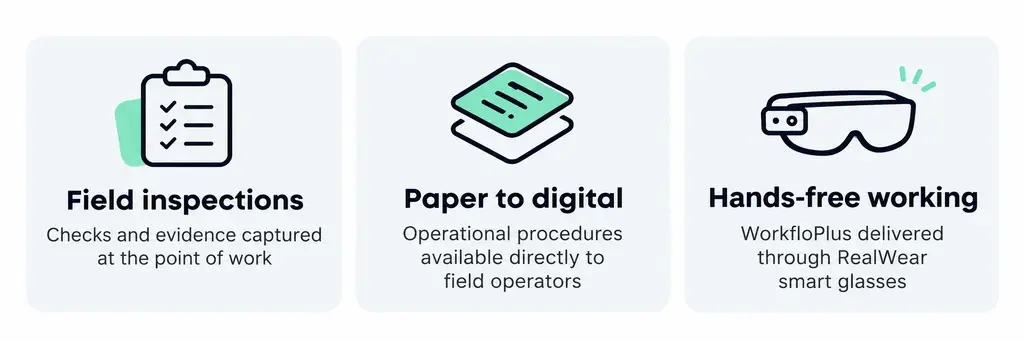
WorkfloPlus provided a way to bring those steps into one digital process, allowing the inspection to be completed on a tablet and the information captured as the work was carried out.
“We have a procedure where a team leader has to print out a valid inspection. It’s a tick box exercise, so they tick that box on paper and then have to go back to their laptop and put that information back into the laptop. But with having WorkfloPlus it’s there, it’s quick and easy, and it’s on a tablet.” Cerys Middle, Works Operating Manual Team Manager, Dŵr Cymru Welsh Water
Instead of completing the inspection on paper and entering the results again afterwards, the checks and the information they produced became part of the same digital process.
For utility field operations, that creates a much clearer connection between carrying out the inspection and making the resulting information available to the wider business.
Putting the procedure in front of the operator
Field work often involves more than completing a checklist. Some jobs need a defined sequence to be followed from start to finish.
Meter replacement was one of the processes explored by Dŵr Cymru Welsh Water. The work involved defined steps, including removing the existing meter, capturing relevant information, recording unusual conditions and completing the required checks before restoring the supply.
WorkfloPlus turned the procedure into digital work instructions that could be accessed by the operator carrying out the job.
That meant the process travelled with the work rather than remaining in a paper manual or separate document.
“It’s basically working smarter not harder. Having that workflow there in readiness for the operator makes it much easier.” Cerys Middle, Dŵr Cymru Welsh Water
Capturing evidence from the field
The information gathered during utility field work can be just as important as the instructions themselves.
Dŵr Cymru Welsh Water needed operators to capture information about the assets and conditions they found on site. For meter work, photographs could show the condition of a boundary box or identify an issue requiring further attention.
The approach also explored capturing information such as job timings and attendance alongside the work.
WorkfloPlus brought those details into the same digital process as the instructions and checks.
Instead of reconstructing what happened after an engineer had left site, the relevant evidence could be captured while the job was taking place.
Supporting compliance and audit evidence
Utility operations need to demonstrate that required procedures and checks have been completed.
As Cerys explained: “Compliance is essential at Welsh Water because we get internally and externally audited. So having a workflow that can actually be sent automatically reduces the risk of not being compliant.”
WorkfloPlus allowed completed inspection information to move through the process digitally rather than relying on paper being returned and entered elsewhere.
Dŵr Cymru Welsh Water also highlighted the importance of providing evidence around quality, health and safety and environmental controls.
Capturing checks and evidence as part of the work created a clearer connection between the required procedure and the information available for review afterwards.
Taking digital work instructions hands-free
Some utility work makes holding a phone or tablet impractical.
Dŵr Cymru Welsh Water combined WorkfloPlus with RealWear smart glasses, allowing operators to access digital work instructions while keeping their hands available for the task.
RealWear could also support remote assistance, allowing an operator on site to contact someone elsewhere for additional guidance when needed.
This brought together the procedure, hands-free execution and access to expertise at the point of work.
Applying the approach across different utility tasks
The approach was not limited to one type of field job.
Alongside inspections and meter replacement, Dŵr Cymru Welsh Water explored digital procedures with its dam teams, using WorkfloPlus through RealWear smart glasses.
That is particularly relevant to utility operations because there is rarely one standard frontline process.
Inspections, maintenance, asset checks and field service may all involve different procedures, but the underlying requirement is similar: the person doing the work needs the right process, and the business needs useful information about what happened.
The Dŵr Cymru Welsh Water example shows how the same digital execution approach can support different operational activities.
Keeping operational knowledge closer to the work
Moving procedures away from paper also creates an opportunity to make practical knowledge easier to share.
Dŵr Cymru Welsh Water highlighted the value of involving experienced employees in new digital ways of working and using their input to help shape how procedures are delivered to other operators.
Rather than important knowledge existing only in manuals or in the experience of individual employees, digital work instructions can put that knowledge closer to the person carrying out the task.
For utilities managing specialist skills and experienced workforces, this provides another way to retain and share operational knowledge.
Connecting the procedure, the field work and the evidence
The operator has the required procedure at the point of work. Checks and inspections are completed as part of the process. Photos and other information are captured while the job is taking place.
The resulting information is then available without someone having to recreate the job afterwards from paper notes or separate records.
That creates a clearer connection between what should happen, what happened in the field and the evidence available afterwards.
For utility operations, this is where digital work instructions become more than a replacement for paper. They become part of how the work is carried out and how the business understands the work that has been completed.
Digital work execution for utilities
Utility work happens across distributed assets, remote locations and regulated environments. Engineers and operators may be carrying out inspections, maintenance, installations or safety checks far from the office.
WorkfloPlus puts the required process in front of the person doing the job while capturing the checks, findings and evidence generated along the way.
Dŵr Cymru Welsh Water provides a practical example of that approach in the water industry: the procedure guides the work, the evidence is captured as it happens, and the information needed afterwards comes directly from the completed job.
Find out more
See how WorkfloPlus supports inspections, maintenance, field service and evidence capture across utility operations: WorkfloPlus for Utilities
Explore how inspections can be guided consistently while findings and supporting evidence are captured at the point of work: Digital Inspections
See how operational procedures can be turned into clear, step-by-step instructions available wherever the work takes place: Digital Work Instructions
Explore how WorkfloPlus and wearable technology can provide access to instructions and information while keeping operators’ hands free: Smart Glasses & Hands-Free Operations