
Making Digital Transformation Work
How To Turn Strategy into Everyday Actions
Companies invest in systems, platforms and programmes with the right intent. But once it reaches the frontline, reality intervenes.
Processes vary.
Adoption stalls.
Data becomes unreliable.
Momentum fades.
For a successful digital transformation it works in the real world, not just on paper.

Why Digital Transformation Projects Fail
Transformation projects usually begins with energy and optimism.
There’s a roadmap. A business case. A pilot.
Then the work begins.
Frontline teams are asked to change how they work, often without support.
Managers receive reports days or weeks later and lose visibility.
Confidence drops.
Resistance sets in when people feel:
- change is happening to them, not with them
- tools don’t help in real situations
- success depends on heroics rather than systems
- data doesn’t reflect reality
At that point, digital transformation becomes another programme. Not a new way of operating.
What Successful Projects Do First
Successful digital transformation starts in a different place.
It is designed around job execution, not systems.
Instead of asking, “What platform should we deploy?”, is considers:
“How do we support people to do the work correctly, every time, in real conditions?”
This shift changes everything.
When work is guided at the point of execution and evidence is captured as tasks are completed, behaviour changes naturally. Adoption improves. Data becomes reliable. Transformation stops being a project and starts becoming part of everyday work.
Free Guide:
Explore the role of job execution data in successfull digital transformation projects.

How to Avoid the “Pilot Trap”
Many transformation programmes stall at pilot stage because they’re difficult to scale.
What works in one team relies on individuals, local knowledge or manual effort. Scaling requires new training, new documentation, and new change programmes — which slows everything down.
Transformation scales when job execution is consistent by design.
When guidance, checks and data capture are embedded into the work itself, new sites and teams adopt the same standards naturally. You scale behaviour, not just systems.
Making Transformation Safe in Regulated Environments
For those in heavily regulated industries, digital transformation carries extra risk.
Change must not compromise compliance, safety or traceability. This often causes transformation to slow down or stop altogether.
The safest way to transform is to capture evidence as work happens.
When proof of work is generated during job execution, you gain confidence that change is controlled. Audits become easier. Standards are maintained. Improvement can continue without fear.
Why Data Quality Determines Transformation Success
Everyone expects to get better data from transformation, but data quality is rarely designed in from the start.
When data is captured after the fact, it’s incomplete, delayed or disputed. When it’s captured during job execution, it reflects reality.
This is the data that supports continuous improvement, better decisions and future AI-ready operations. It’s also the data that shows the transformation is on track.
Preparing for What Comes Next
Many compaines talk about AI as the next phase of transformation.
But AI only works when operations are already visible and consistent.
Successful AI projects don’t start with algorithms. They start by making job execution reliable.
When digital transformation is designed around job execution, AI-readiness becomes a natural outcome.
Industry 5.0 and the Leadership Shift
The most successful transformation projects have moved away from technology-led change to human-centred operations.
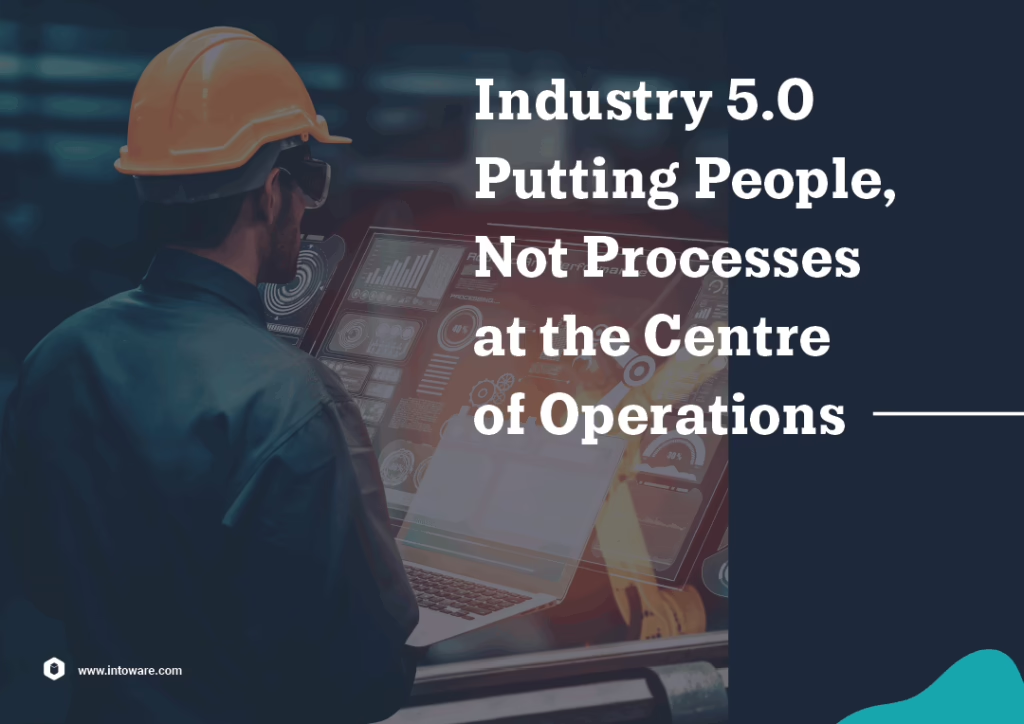
The move to Industry 5.0 from Industry 4.0 reflects this change: technology exists to support people, not replace them. Execution-led transformation fits this model naturally, enabling better decisions while preserving judgement, safety and expertise.
Download: Industry 5.0 eBook
Explore the next industrial revolution and the benefits of putting human processes at the centre of operations.
How To Start Without Overwhelming Operations
The most effective digital transformations don’t begin with big programmes.
They begin with one process that matters.
One inspection.
One procedure.
One task that causes risk, delay or rework.
When job execution is supported digitally and evidence is captured consistently, results appear quickly.
Managers gain confidence.
Workers see value.
Digital transformation grows organically.
Learning from Those Who’ve Done It
Across the Digital Transformation Bytes podcast series, operations and transformation leaders share what worked, what failed and what they’d do differently.
Their experiences point to the same conclusion:
transformation sticks when it’s built into how work is done — not layered on top.

See how to make digital transformation work.
Explore how designing digital transformation around job execution improves adoption, confidence and results.