
Integrations & the Digital Operations Ecosystem
Connecting Job Execution to the Systems You Already Rely On
Most organisations don’t lack systems.
They lack connection between them.
ERP, EAM, CMMS, BI and reporting platforms are excellent at planning, tracking and analysing. But they miss the reality of work — the checks completed, the evidence captured, the decisions made on the ground.
This disconnect creates blind spots.
Integrations bridge that gap by connecting execution at the point of work to the wider digital ecosystem that supports your business.
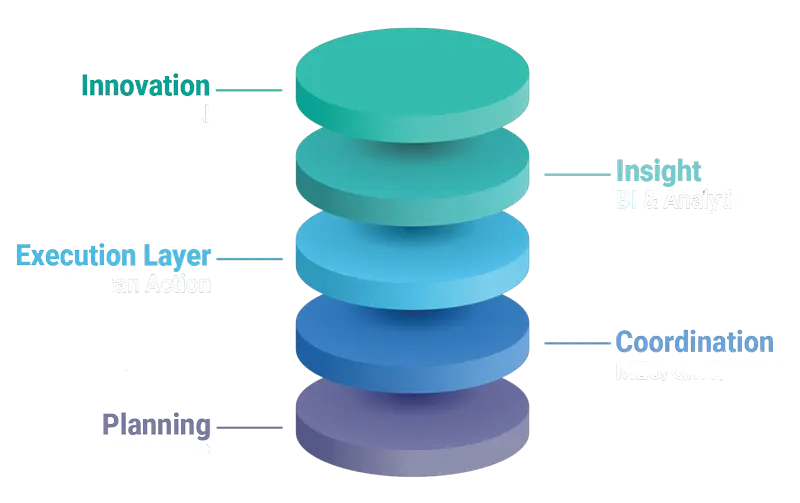
Why Integration Matters More Than Ever
As operations become more digital, the number of systems involved continues to grow. Each one plays a role, but working in isolation, insight is lost.
Plans are created centrally.
Work is carried out locally.
Results are reviewed later.
Without integration, job execution data arrives late, incomplete or not at all. Teams are forced to reconcile systems manually, increasing effort and reducing trust in the data.
Connecting the execution layer to your wider ecosystem ensures that what happens on the ground is reflected accurately across the organisation.
Execution Is the Missing Connection
Most systems are designed to manage what should happen.
Very few capture how work actually happens.
That gap sits between planning and reportin. Where people carry out tasks, follow instructions, perform checks and adapt to conditions.
Integrating execution data into your digital landscape closes that gap. It ensures that operational systems are informed by reality, not assumptions.
Free Download:
Beyond ERP. MRP & MES eBook
A practical guide on how to close the gap between planning and reality.

Making Data Flow While Removing Admin
Integration shouldn’t create more work for frontline teams.
The most effective integrations work quietly in the background. As tasks are completed and evidence is captured, data flows automatically to the systems that need it — without additional forms, duplication or manual updates.
This approach keeps the focus on doing the work well, while ensuring the organisation benefits from accurate, timely information.
Supporting Reporting, Insight and Decision-Making
When execution data flows into your reporting and analytics platforms, insight stops being retrospective and starts becoming useful.
You can see how processes perform in real-life. Where variation appears, which assets or locations need attention, and how compliance is maintained over time. This visibility enables continuous improvement, as decisions are based on real data rather than assumptions.
This data becomes critical for AI-ready operations. Reliable, structured insight into how work is actually carried out allows analytics and AI tools to learn from reality, not theory.
Integrations That Scale Across Teams and Regions
As organisations grow, consistency becomes harder to maintain.
Different sites adopt different tools. Local processes evolve. Reporting becomes fragmented.
A well-integrated digital operations ecosystem helps maintain alignment. Execution data is captured in a consistent way, then shared across systems and teams — regardless of location.
This makes it easier to scale operations, support global teams and maintain confidence in the data.
Enabling Compliance Without Extra Complexity
In regulated environments, integration plays a critical role in compliance and audit readiness.
When evidence captured during work flows directly into compliance and reporting systems, traceability improves and audit preparation becomes far less disruptive.
Instead of chasing information, teams can focus on improving standards, knowing the evidence is already in place.
From Integration to Insight
Integration is not an end in itself.
Its value lies in what it enables.
When execution data is connected to the wider digital ecosystem, organisations move beyond disconnected systems and delayed reporting. Insight becomes timely. Improvement becomes practical. AI becomes achievable.
Integration turns operational activity into business intelligence.
Whitepaper Insight:
Explore the ways to enhance business intelligence by combining data analytics, people, and business processes into a single, cohesive strategy.

Building a Connected Digital Operations Ecosystem
A connected ecosystem doesn’t require replacing existing systems.
It requires connecting them.
By integrating execution into your digital landscape, you create a clearer, more reliable picture of operations — one that supports people, processes and future innovation.
See how connecting job execution strengthens your digital operations ecosystem.
Explore how integrating real-world work data improves visibility, confidence and decision-making across your organisation.