
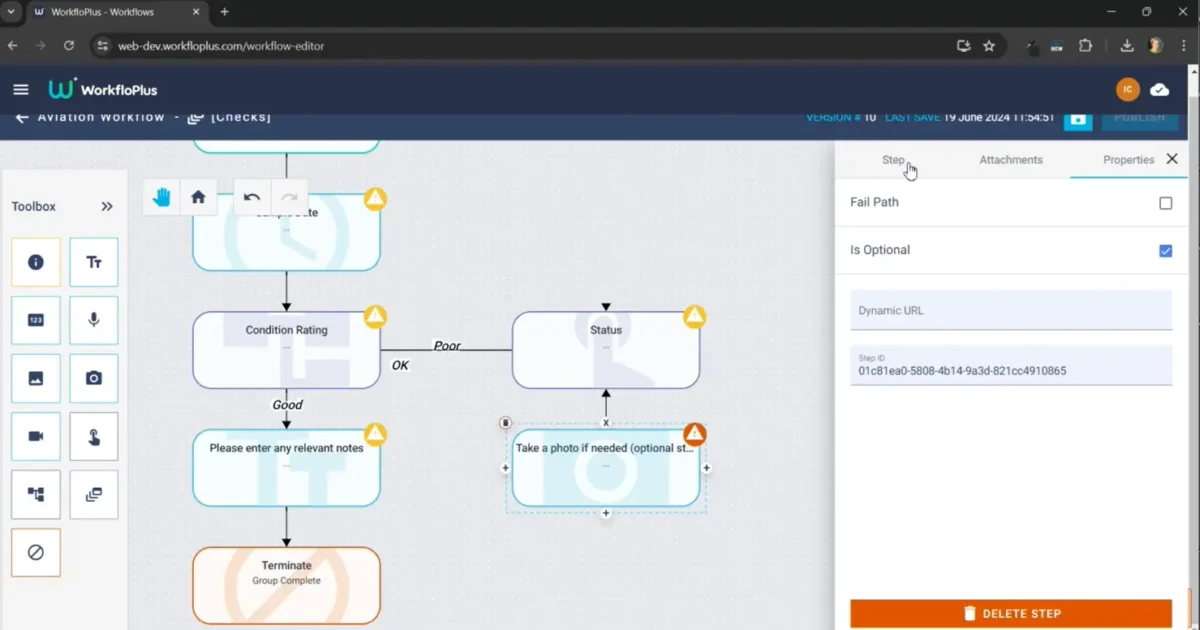
Workflows are structured sequences of steps that guide a worker through a task or process. These steps help ensure that work is completed consistently and correctly. They can include conditional steps, approvals, checks, and evidence capture. When workflows are digital, they become more visible, repeatable, and easier to improve.
Digital workflows allow organisations to replace paper and manual reporting with connected tasks. This provides both clarity and control. It also enables managers to see how work is carried out across sites and teams. As a result, decisions can be based on real activity rather than assumptions.
They are a central part of digital transformation and help teams remove variation and increase process reliability.
How this applies to WorkfloPlus
WorkfloPlus enables teams to build and manage digital workflows. The editor makes it easy to design steps and add evidence requirements. In addition, WorkfloPlus includes AI assistance. This AI support helps structure workflows efficiently and speeds up workflow creation.
Every step is recorded as work is completed. Therefore, WorkfloPlus not only guides workers but also creates a full audit trail and operational insight.
Related Concepts
Operational workflows are closely linked to several key concepts:
- Guided Workflows – digital workflows that guide workers through tasks.
- Work Execution – the process of performing operational activities.
- Digital Operational Workflows – digitised workflows used to manage operational processes.
- Operational Data Capture – recording data during workflow steps.
Together these concepts help organisations structure and improve operational processes.
Why Workflows Matter
Well designed workflows help organisations ensure tasks are performed consistently and efficiently. Structured processes reduce errors while helping teams follow procedures correctly.
Digital workflow systems provide additional benefits by capturing operational data and enabling organisations to monitor process performance.